
How to Build a Marketing Funnel That Converts Visitors into Customers
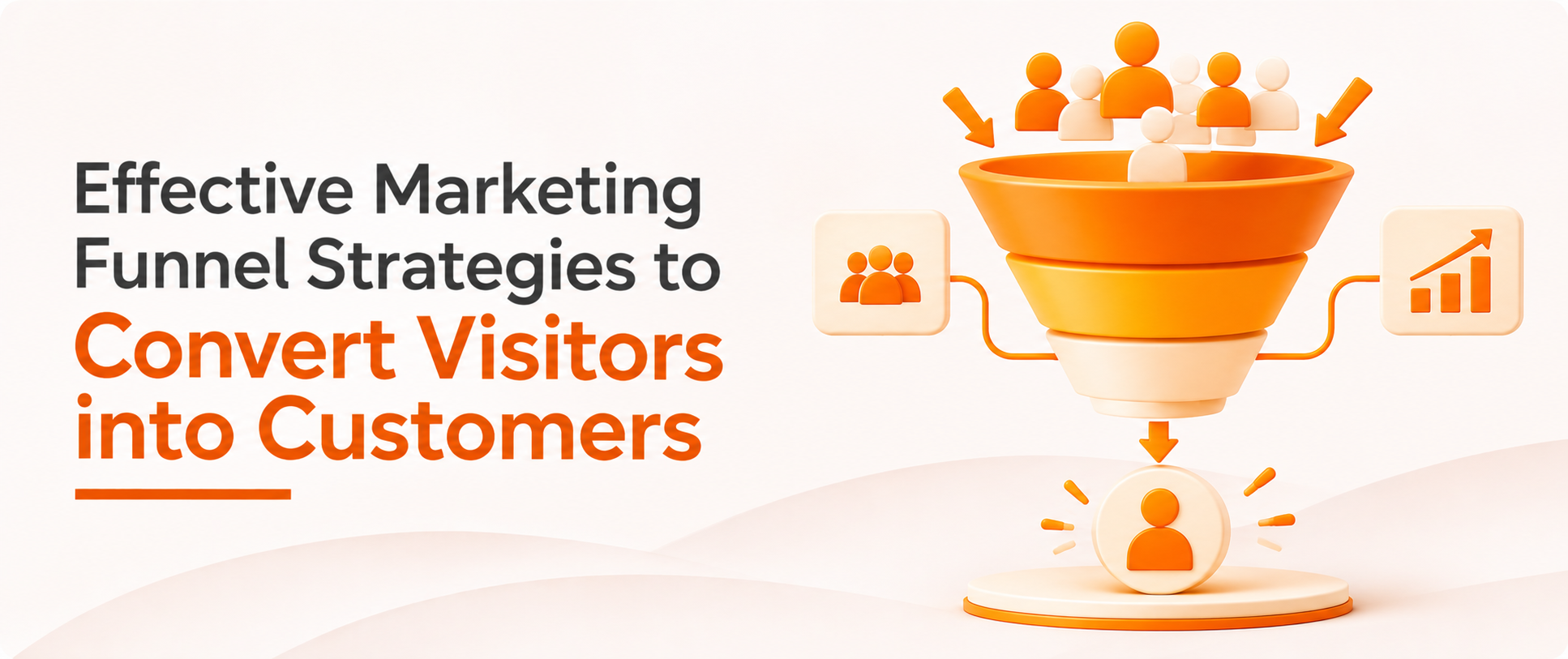
A marketing funnel is a structured process that guides potential customers from discovering your business to taking action, such as making a purchase or submitting an enquiry. A well-planned marketing funnel converts website visitors into customers by delivering the right information, building trust, and encouraging action at every stage of the customer journey.
For businesses and startups, attracting website traffic is only the first step. The real challenge is converting visitors into qualified leads and paying customers.
Whether you want to generate more enquiries, improve website conversions, or increase sales, understanding how a marketing funnel works can help you build a more effective digital marketing strategy.
What Is a Marketing Funnel?
A marketing funnel represents the journey potential customers follow before purchasing a product or service. It helps businesses understand customer behaviour and create relevant marketing activities at each stage.
A traditional marketing funnel has three main stages:
- Top of the Funnel (TOFU): Attract people who are discovering your business or exploring a problem.
- Middle of the Funnel (MOFU): Educate visitors, build trust, and help them evaluate available solutions.
- Bottom of the Funnel (BOFU): Encourage interested prospects to take action and become customers.
Each stage requires different content, messaging, and conversion strategies.
3 Important Stages of a Marketing Funnel That Convert Visitors into Customers
1. Awareness Stage: Attract the Right Audience
The awareness stage is where potential customers first discover your business, products, or services.
At this stage, your objective is to attract relevant visitors and introduce your brand as a useful source of information.
Effective marketing strategies include:
- SEO-optimised blogs and website content.
- Informative social media posts.
- Educational videos and guides.
- Search engine advertising.
- Industry-related resources.
For example, a business offering web development services can attract potential customers through content such as “Signs Your Business Needs a Website Redesign.”
The focus should be on answering customer questions rather than immediately pushing a sale.
2. Consideration Stage: Build Trust and Interest
Once visitors know about your business, they begin evaluating whether your products or services meet their needs.
At this stage, provide useful information that helps potential customers understand your expertise and compare solutions.
Effective strategies include:
- Detailed service pages.
- Case studies and project examples.
- Customer testimonials and reviews.
- Comparison guides.
- Email newsletters and informative resources.
Your website should clearly explain what you offer, how it works, and what makes your business a suitable choice.
The goal is to turn initial interest into genuine consideration.
3. Conversion Stage: Turn Leads into Customers
The conversion stage focuses on encouraging interested visitors to take the next step.
This could include booking a consultation, requesting a quotation, scheduling a demonstration, or completing a purchase.
Effective conversion strategies include:
- Clear and relevant calls to action (CTAs).
- Simple enquiry and contact forms.
- Transparent service information.
- Relevant testimonials and trust signals.
- Easy website navigation.
- Dedicated landing pages.
Avoid unnecessary steps in the enquiry process. The easier it is for visitors to take action, the fewer obstacles they face when converting.
How to Build a Marketing Funnel That Converts Visitors into Customers
Creating an effective marketing funnel requires a clear understanding of your audience, customer journey, and business objectives.
Follow these seven steps:
1. Define Your Target Audience
Identify who your ideal customers are, what problems they face, and what influences their purchasing decisions.
Understanding your audience helps you create relevant content and marketing messages for each funnel stage.
2. Map the Customer Journey
Understand how customers move from discovering your brand to considering your services and making a decision.
Identify important touchpoints such as search results, blog articles, service pages, emails, and enquiry forms.
3. Create Content for Every Funnel Stage
Different customers need different information depending on where they are in their buying journey.
| Funnel stage | Content examples | Objective |
| TOFU | Blogs, guides, educational videos | Attract relevant visitors |
| MOFU | Case studies, service comparisons, email content | Build trust and interest |
| BOFU | Testimonials, consultations, service pages | Generate enquiries and sales |
Your content should guide visitors naturally towards the next stage instead of forcing an immediate purchase.
4. Optimise Your Website for Conversions
Your website plays an important role in turning visitors into leads.
Focus on:
- Mobile-friendly website design.
- Fast page loading.
- Clear service descriptions.
- Easy navigation.
- Visible contact information.
- Simple enquiry forms.
- Relevant CTAs on important pages.
A good user experience makes it easier for potential customers to understand your services and contact your business.
5. Use SEO to Attract High-Intent Traffic
SEO helps your website appear when potential customers search for relevant products, services, or solutions.
Target keywords based on search intent:
- Informational keywords for awareness.
- Commercial investigation keywords for consideration.
- Transactional keywords for conversion.
For example, someone searching “what is SEO” may be researching, while someone searching “SEO agency for small businesses” may be closer to choosing a service provider.
Targeting different search intents helps attract visitors at multiple funnel stages.
6. Use Remarketing and Email Marketing
Not every visitor converts during their first website visit.
Email marketing and remarketing can help businesses reconnect with interested audiences.
You can use:
- Follow-up emails after enquiries.
- Educational email sequences.
- Relevant offers and updates.
- Remarketing campaigns for eligible audiences.
- Helpful content that addresses customer concerns.
These activities help maintain engagement and encourage visitors to return when they are ready to make a decision.
7. Track Performance and Improve the Funnel
A marketing funnel should be reviewed regularly to identify where visitors leave and which activities generate results.
Monitor important metrics such as:
| Metric | What it measures |
| Website traffic | Number of visitors |
| Landing-page conversion rate | Visitors completing a desired action |
| Lead generation | Enquiries and potential customers |
| Cost per lead | Marketing spend required to generate a lead |
| Lead-to-customer rate | Leads that become paying customers |
| Bounce and engagement metrics | How visitors interact with website content |
Use this data to identify gaps, improve landing pages, refine CTAs, and optimise marketing campaigns.
Common Marketing Funnel Mistakes Businesses Should Avoid
Even businesses with good website traffic can struggle to generate leads when their marketing funnel is not properly structured.
Avoid these common mistakes:
- Attracting irrelevant website traffic.
- Using the same content for every funnel stage.
- Having unclear or weak calls to action.
- Making enquiry forms unnecessarily complicated.
- Ignoring mobile user experience.
- Failing to follow up with potential leads.
- Not tracking conversions and funnel performance.
A successful marketing funnel focuses on attracting the right visitors and helping them take the next step.
How Vibebrand Transmedia Helps Businesses Build a Marketing Funnel That Converts
Building a marketing funnel requires more than running advertisements or publishing website content. Businesses need a connected digital strategy that attracts relevant audiences, builds trust, and generates enquiries.
Vibebrand Transmedia helps businesses strengthen their digital presence through SEO, web development, and content marketing.
Here is how these services support different parts of the marketing funnel:
SEO for Attracting Relevant Visitors
Vibebrand Transmedia’s SEO services help businesses improve their organic search visibility through keyword research, content optimisation, and website SEO strategies.
This helps potential customers discover relevant business offerings when searching online.
Web Development for Better Conversions
A professionally developed website provides the foundation for an effective marketing funnel.
Website structure, user experience, mobile responsiveness, landing pages, and clear enquiry options can help businesses make it easier for visitors to take action.
Content Marketing for Building Trust
Relevant content helps businesses answer customer questions and communicate their expertise.
Blogs, service content, guides, and other informative resources can support visitors throughout their decision-making journey.
By bringing SEO, web development, and content marketing together, Vibebrand Transmedia helps businesses create a more connected digital strategy focused on visibility, engagement, and lead generation.
Conclusion: Turn Your Website Traffic into Business Opportunities with Vibebrand Transmedia
Getting website visitors is important, but converting those visitors into qualified leads and customers is what creates meaningful business opportunities.
A successful marketing funnel brings together the right audience, valuable content, search visibility, a user-friendly website, and clear calls to action. Each stage should help potential customers move closer to making a decision.
If your website is attracting visitors but not generating enough enquiries, it may be time to improve your marketing funnel.
Vibebrand Transmedia helps businesses connect SEO, web development, and content marketing to build a stronger digital presence and improve opportunities for lead generation.
Ready to turn more website visitors into potential customers? Connect with Vibebrand Transmedia today to discuss your digital marketing goals and explore a strategy designed around your business.
Frequently Asked Questions (FAQs)
1. What is a marketing funnel in digital marketing?
A marketing funnel is a process that guides potential customers through three main stages: awareness, consideration, and conversion. It helps businesses attract relevant visitors, build trust, and encourage actions such as enquiries or purchases.
2. What are the three main stages of a marketing funnel?
The three main stages are:
- Awareness: Potential customers discover your business.
- Consideration: Visitors evaluate your products or services.
- Conversion: Interested prospects take action and become customers.
Each stage requires different content and marketing activities.
3. How do you build a marketing funnel that converts?
Start by defining your target audience, mapping the customer journey, creating content for each funnel stage, optimising your website, attracting relevant traffic through SEO, and tracking conversion performance. Regular improvements help identify and remove obstacles in the customer journey.
4. How does SEO help improve marketing funnel performance?
SEO attracts relevant visitors through organic search. Informational content supports awareness, comparison and service pages support consideration, and well-optimised landing pages help visitors take action. This makes SEO valuable across multiple stages of the marketing funnel.
5. How can I convert website visitors into qualified leads?
You can improve lead generation by targeting relevant audiences, providing useful content, creating dedicated landing pages, adding clear CTAs, simplifying enquiry forms, and offering easy ways to contact your business.
6. How can Vibebrand Transmedia help businesses generate more leads?
Vibebrand Transmedia offers SEO, web development, and content marketing services that support online visibility, website experience, and customer engagement. These services can help businesses build a more structured digital presence focused on attracting relevant visitors and generating enquiries.
7. How do you measure marketing funnel success?
Measure website traffic, landing-page conversions, enquiries, cost per lead, and lead-to-customer rate. These metrics help businesses understand how effectively their marketing funnel attracts visitors and converts them into customers.